Did you know nearly 20% of all formal event mail has errors? This causes big delays. Sending your stationery right is key. It’s the first thing your guests see about your wedding.
Knowing proper etiquette means your envelopes get to the right place. It also keeps your invitations looking good. Whether you have many guests or just a few, being clear is important.
This guide will show you how to address wedding invitations easily. We’ll cover formal titles, family groups, and when to send your invitations. Follow these steps to make sure your envelopes are perfect and meet high standards.
Key Takeaways
- Understand the importance of formal titles for every guest.
- Learn the best practices for managing complex guest lists.
- Discover the ideal timeline for mailing your stationery.
- Ensure your envelopes reflect the tone of your celebration.
- Avoid common mistakes that lead to delivery delays.
Understanding the Basics of How to Address Wedding Invitations
When you start planning your wedding, learning how to address wedding invitations is key. Your stationery is the first thing guests see, setting the tone for your big day. Getting these details right shows the importance of your wedding.
The Importance of Proper Etiquette
Following wedding invitation etiquette shows respect to your guests. Addressing envelopes with care means a lot to them. It makes your event feel welcoming from the start.
Accurate addressing also avoids confusion about who’s invited. Using the right titles and names makes guests feel at ease. This small act of kindness builds excitement for your wedding.
Choosing Between Formal and Informal Styles
The style of your invitations depends on your wedding’s vibe. A black-tie event calls for formal addressing, while a casual wedding is more relaxed.
The table below shows the main differences to help you choose:
| Feature | Formal Style | Informal Style |
|---|---|---|
| Titles | Always include (Mr., Mrs., Dr.) | Optional or first names only |
| Names | Full names written out | Nicknames or first names |
| Addresses | Spell out all words (Street, Avenue) | Abbreviations are acceptable |
| Tone | Traditional and elegant | Warm and casual |
Your choice should match the atmosphere you want. Whether it’s classic or modern, wedding invitation etiquette is key. Knowing how to address wedding invitations makes planning easier.
Gathering Your Guest List and Mailing Addresses
A well-organized spreadsheet is your best friend when addressing wedding invitations. Before you start, make sure your data is clean and easy to access. This step is key to wedding invitation etiquette, helping you avoid mistakes and stay calm.
Organizing Your Spreadsheet for Success
Begin by making a digital document for your guest list. Include specific columns to have all the info you need. A clear layout helps you not miss anyone when you mail the invitations.
Here are some columns to consider:
- Full names of all guests
- Complete mailing addresses
- Number of invitations needed per household
- RSVP status and dietary restrictions
Having all this info in one spot makes addressing wedding invitations quicker. You can sort your list by zip code or last name, making mailing easier.
Verifying Addresses with Your Guests
Even the best lists can have old info. To follow wedding invitation etiquette, check each address before sending your invitations. A simple mistake can mean your invitations don’t reach their destination.
“The most reliable way to ensure your mail arrives is to reach out to your guests directly. A quick text or email can save you from the headache of lost invitations.”
Use digital tools like Google Forms or wedding website features to get updated contact info. Always double-check names and house numbers. These steps show your guests you care and keep your planning on track.
Formal Wedding Invitation Wording for Married Couples
When you’re addressing wedding invitations for a formal event, proper etiquette is key. It shows your guests you value their presence and respect their relationship status. The right formal wedding invitation wording makes a great first impression for your big day.
Using Traditional Titles and Last Names
For couples with the same last name, use the husband’s full name with titles. Write “Mr. and Mrs. James Smith” on the outer envelope. This classic style is perfect for black-tie weddings and elegant events.
For a modern twist, include the wife’s first name too. So, it’s “Mr. James Smith and Mrs. Sarah Smith.” This style is gaining popularity, showing respect for both names.
Handling Couples with Different Last Names
Many couples keep their own last names after marriage. List both names in full, connected by “and.” For example, “Ms. Sarah Miller and Mr. James Smith” on the envelope.
If names are too long, put them on two lines. List the person you’re closest to first, then their partner. This keeps the envelope readable and neat.
When to Use First Names Only
While formal events often use titles, first names are okay for some events. They make gatherings feel warmer and more personal, great for close friends or family.
But, even for casual weddings, titles are safer to avoid any offense. If unsure, traditional formal wedding invitation wording is best. Here’s a quick guide to help you choose.
| Couple Status | Recommended Format | Best For |
|---|---|---|
| Shared Last Name | Mr. and Mrs. John Doe | Traditional Weddings |
| Different Last Names | Ms. Jane Smith and Mr. John Doe | Modern Formal |
| Close Friends | Jane Smith and John Doe | Casual Gatherings |
| Professional Peers | Dr. Jane Smith and Mr. John Doe | Formal Events |
Addressing Invitations for Unmarried Couples Living Together
When you’re making your guest list, you might think about how to address invitations for unmarried couples. It’s easy to get it right by following a few simple rules. Using the right formal wedding invitation wording makes sure both partners feel respected and included.
Listing Names on Separate Lines
The most common way to address an envelope for an unmarried couple is to list their names separately. This method gives each person equal prominence on the stationery. Place the names in the center of the envelope, one below the other.
This format avoids the need for an “and” between the names. It’s a clean and professional way to invite both individuals as a unit, regardless of their marital status.
Alphabetical Order Rules for Partners
When deciding who goes first, follow the rule of alphabetical order by last name. If they share the same last name, you can list them in any order. But if they have different last names, alphabetical order is best.
Sticking to this rule keeps your guest list consistent and polite. It shows you’ve put thoughtful attention to detail into your invitations. Your guests will surely notice and appreciate it.
Handling Invitations for Single Guests and Plus Ones
Planning your wedding stationery is a big task. It includes figuring out how to address invitations for single guests and plus ones. By following wedding invitation addressing guidelines, you can avoid confusion. This way, every guest knows who’s invited to your big day.
Addressing the Envelope for a Single Guest
Inviting a single guest is easy. Just write their full name in the center of the envelope. If you’re using formal stationery, add their title, like Mr., Ms., or Miss, before their name.
For a more casual vibe, you can skip the title. But, being consistent is important for a polished look. Here are some tips for your wedding invitation addressing guidelines:
- Always use the guest’s full legal name.
- Put the name on one line for a clean look.
- Write the address clearly to avoid delivery problems.
How to Properly Include a Plus One
Deciding on a plus one can be tough. Once you’ve decided, make sure to clearly state it on the envelope. If you have an inner envelope, write the guest’s name followed by “and Guest” on the next line.
If you only have an outer envelope, write the guest’s name and “and Guest” right on the front. This way, there’s no confusion about your wedding invitation addressing guidelines. It makes your guests feel welcome and in the know.
Being clear about plus ones avoids awkward talks later. If you don’t offer a plus one, just address the envelope to the guest alone. This keeps your wedding invitation addressing guidelines consistent and professional.
Addressing Invitations for Families with Children
Planning your guest list is a big part of your wedding planning. Using the right wedding invitation addressing guidelines makes your guests feel welcome. It helps avoid confusion and sets the right mood for your big day.
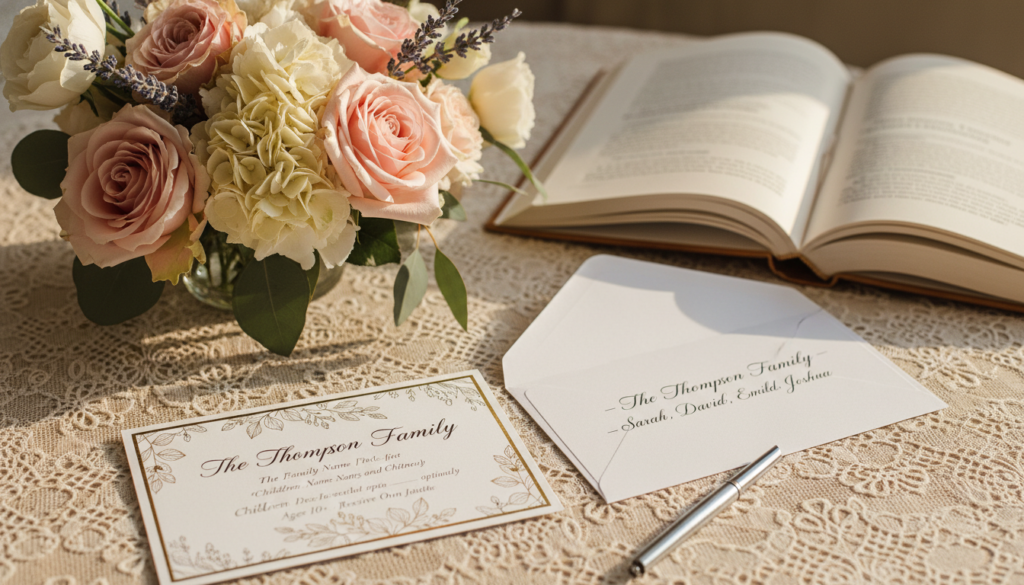
Including Children Under Eighteen
When inviting the whole family, start with the parents’ names on the first line. Then, list the kids’ names on the second line. It’s common to list them in age order, from oldest to youngest.
If kids have the same last name as their parents, you only need to write their first names. This keeps the envelope neat and elegant. It follows traditional wedding invitation addressing guidelines while being personal and warm.
When Children Are Not Invited
Choosing an adults-only wedding is a personal choice. To avoid confusion, only address the envelope to the adults. This clearly shows the invitation is for the parents only.
If you’re worried about clarity, add a note on your wedding website or in the invitation suite. Being clear and kind is the best way to manage expectations. Your guests will appreciate the honesty, helping them plan childcare early.
| Scenario | Addressing Style | Key Benefit |
|---|---|---|
| Family with children | List parents then children | Clear inclusion |
| Adults-only event | List only parents’ names | Sets firm boundaries |
| Children with different surnames | Include full names | Ensures accuracy |
Navigating Professional Titles and Military Ranks
Understanding professional and military titles can be tricky but adds elegance to your stationery. When addressing envelopes for wedding invitations, using these titles shows you care about the details. It’s a great way to honor your guests’ hard work and dedication.
Addressing Doctors and Medical Professionals
For guests with a medical degree, use “Dr.” before their name. If both spouses are doctors, write “Drs. Sarah and Michael Smith.”
When addressing envelopes for wedding invitations for a doctor and a spouse without a title, list the doctor first. For example, “Dr. Sarah Smith and Mr. Michael Smith.” This way, you honor their profession while keeping it personal.
Using Military Ranks Correctly
Military personnel deserve special recognition on your formal correspondence. Include their full rank, name, and branch of service if applicable. For example, “Captain James Miller, United States Navy.”
If a guest is retired, add “Retired” or “Ret.” after their name. Consistency is key when managing your list. Always check the current rank of your guests to show respect accurately.
Handling Clergy and Government Officials
Clergy members have specific titles that reflect their role. Use their formal title, like “The Reverend” or “Rabbi,” followed by their full name. If they have a spouse, the spouse’s name goes on the next line.
Government officials, like judges or elected representatives, are addressed as “The Honorable.” This is a traditional and respectful way to honor them. By researching these titles, you show your guests you value their presence at your celebration.
Addressing Invitations for Guests with Same-Sex Partners
When you start addressing envelopes for wedding invitations, your main goal is to make every guest feel special. You celebrate the unique bond of your friends and family by how you write their names on the envelope. A thoughtful approach makes sure your stationery shows the warmth and inclusivity of your celebration.
Respecting Preferences and Titles
The most important rule is to honor your guests’ preferences. If you’re unsure about how a couple wants to be addressed, it’s okay to ask them directly. This shows you care about their identity and want to get it right.
Always check if they prefer specific titles, like Mr., Ms., or Mx., or if they prefer none. Respecting these choices makes your event welcoming. Confirming these details avoids awkwardness and shows you care.
Formatting Names for Same-Sex Couples
When you’re ready to address envelopes for wedding invitations, you have a few options. You can list the names on one line with “and,” or on separate lines for a more formal look. If you choose separate lines, the order is up to you, but many prefer alphabetical by last name.
If the partners share a last name, you can address them as “The Messrs. Smith” or “The Mses. Jones.” For couples with different last names, list both full names on the envelope. Consistency is key, so pick a style that feels right for your relationship with the couple and stick with it.
Managing Divorced or Widowed Guests on Envelopes
When you start addressing guests on wedding invitations, you might face tricky situations. This includes divorced or widowed family members. It’s important to be gracious and sensitive to make everyone feel respected.
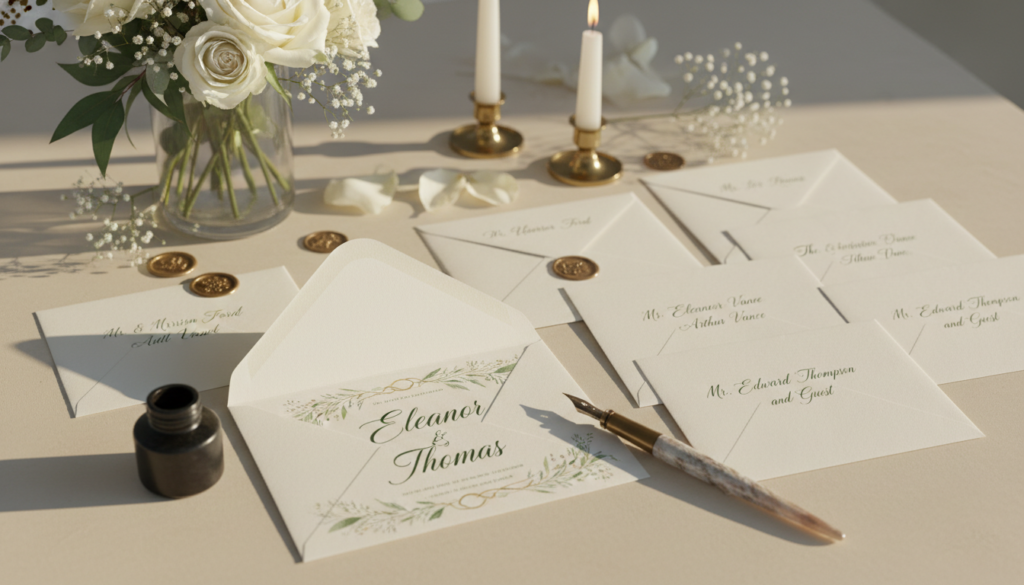
Addressing Divorced Guests Who Have Remarried
For guests who have remarried, use their current legal name. List the wife’s name first, followed by the husband’s. Use “Mr. and Mrs.” if they share a last name, or list them separately if they don’t.
For divorced guests who haven’t remarried, address them as individuals. Use “Ms.” or “Mr.” followed by their last name. If they come with a guest, put their names on separate lines to avoid confusion.
Etiquette for Widowed Guests
It’s important to respect a widowed guest’s wishes. Traditionally, a widow is called “Mrs.” followed by her late husband’s name. But many prefer to be called by their own first name and current last name.
If you’re unsure, it’s okay to ask them directly. Personal preference is key. If in doubt, using their own first name is a safe and respectful choice.
| Guest Status | Recommended Format | Key Consideration |
|---|---|---|
| Remarried Couple | Mr. and Mrs. John Smith | Use current legal names |
| Divorced Individual | Ms. Jane Doe | Use current preferred surname |
| Widowed Guest | Mrs. Jane Smith or Ms. Jane Smith | Respect personal preference |
| Divorced with Guest | Ms. Jane Doe and Guest | Use separate lines if needed |
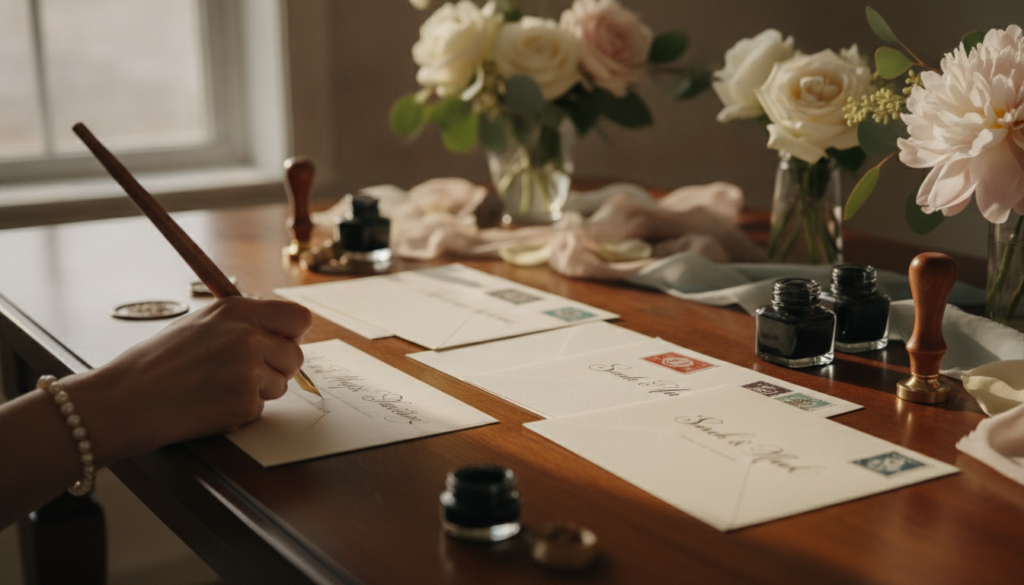
Essential Tips for Calligraphy and Envelope Presentation
When you start addressing guests on wedding invitations, the style you choose sets the event’s tone. The envelope is a beautiful preview of your celebration before guests open it. Whether you hire a pro or do it yourself, your presentation should match your wedding’s theme.
Choosing the Right Ink and Font
Picking the right materials is key for a polished look. If you’re hiring a pro, talk about your color palette to match your stationery. For DIY, here are some tips:
- Test your pens: Always check that your ink flows smoothly on the specific paper stock you have chosen.
- Consistency is key: Use a consistent font style or script throughout the entire guest list to maintain a professional appearance.
- Legibility matters: While fancy flourishes look stunning, ensure that the address remains easy for postal workers to read.
Common Mistakes to Avoid During Addressing
Even with the best intentions, small errors can detract from the elegance of your mailings. Avoiding these common pitfalls will ensure your envelopes look perfect and arrive at their destinations without delay.
First, avoid using abbreviations for street names, states, or titles. Writing out “Street,” “Avenue,” and “California” adds a touch of formal sophistication to your correspondence. Also, be careful of messy handwriting or smudged ink, which can make your hard work look rushed.
Lastly, double-check your spelling for every name and address. Taking the time to verify these details is a key part of addressing guests on wedding invitations properly. A little extra care ensures that every guest feels valued from the moment they receive your envelope.
When to Send Wedding Invitations: The Complete Timeline Guide
Getting the timing right for your wedding invitations is key. It’s not just about how they look, but when they arrive. Using wedding invitation addressing tips helps keep things organized and professional.
The Ideal Window for Mailing Invitations
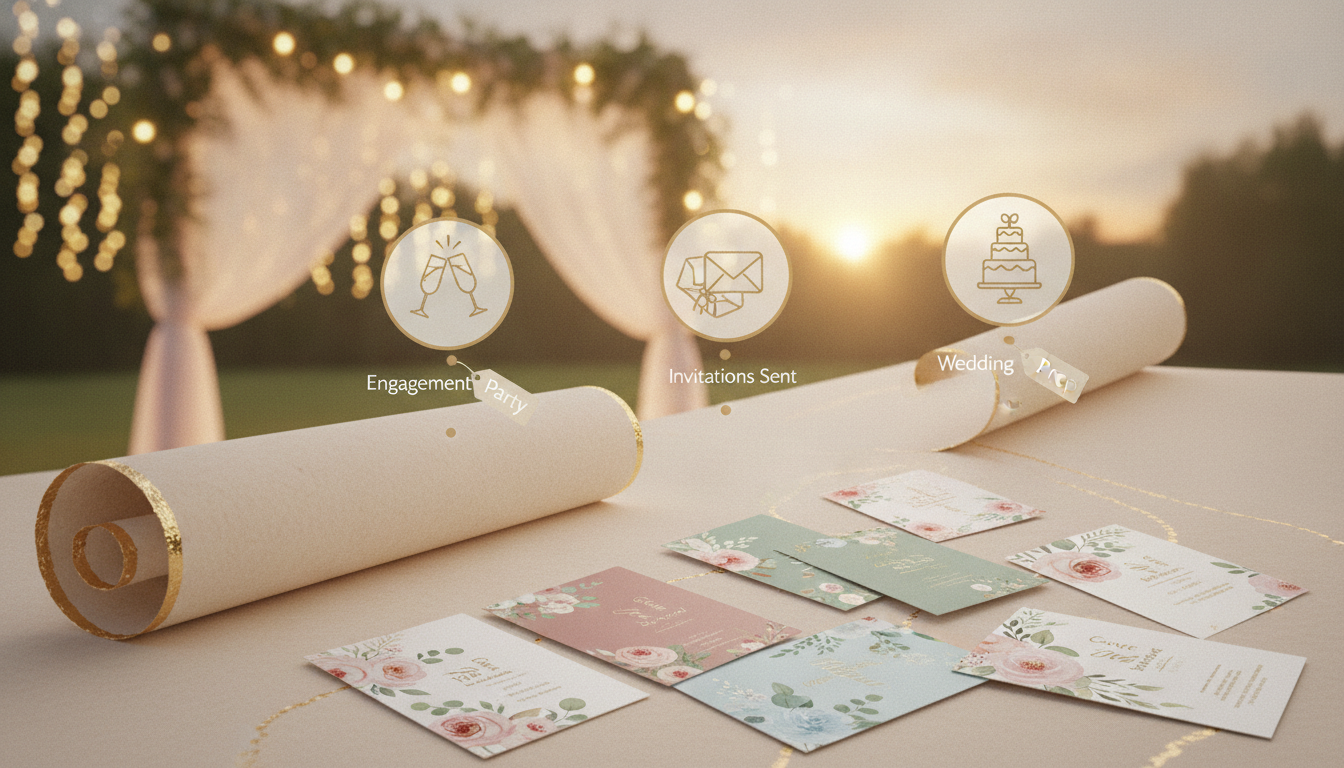
For most weddings, send invitations six to eight weeks before the big day. This gives guests enough time to plan. Sending too early can cause them to lose the invitation. Sending too late can stress them out.
Accounting for Destination Weddings
Destination weddings need a longer timeline. Send invitations three to four months in advance. This lets guests plan their travel and accommodations.
Managing RSVP Deadlines and Follow-ups
Setting a clear RSVP deadline is key. Ask for responses three to four weeks before the wedding. This lets you follow up with any late responders. Keeping track of RSVPs helps you plan smoothly.
Conclusion
Your wedding stationery is the first look at your big day for guests. By following these tips, you make sure they feel special when they open their invitations.
Being precise with your envelopes adds a touch of elegance to your event. It shows you value your guests and are excited to share your day with them. These tips help you avoid mistakes and keep everything looking great.
Handling a long list of names can feel overwhelming. Break it down into smaller tasks to keep your handwriting or calligraphy consistent. This makes the process fun instead of stressful.
Got questions about family situations or unique titles? Don’t hesitate to ask a pro like Minted or Crane Stationery. They offer great advice to help you perfect your invitations.
Remember, the joy of your upcoming marriage is what matters most. Your attention to detail will create lasting memories for everyone. Enjoy this part of your wedding planning.