
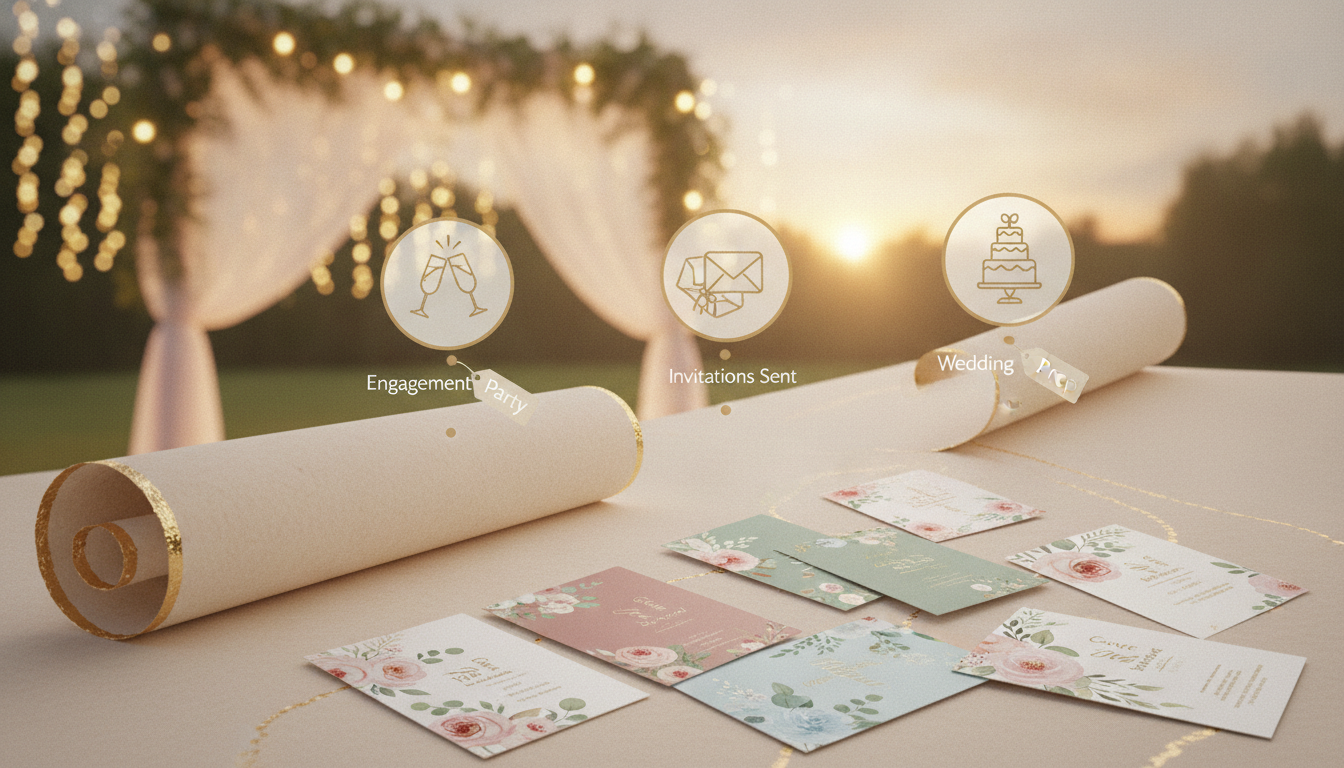



Did you know nearly 40% of couples feel overwhelmed in the last three months of their engagement? Knowing when to send wedding invitations can make your journey calm and joyful.
Proper timing helps your guests plan ahead. A well-planned schedule keeps your wedding day smooth and stress-free.
This guide helps you manage your mailing schedule well. You should enjoy every step, from the first stamp to the last guest’s arrival.
Key Takeaways
- Start your mailing process early to guarantee high attendance rates.
- Create a clear calendar to track your RSVP deadlines.
- Avoid common pitfalls by preparing your guest list months ahead.
- Use digital tools to stay on top of your mailing tasks.
- Prioritize organization to enjoy your engagement period fully.
The Importance of Timing
Planning your invitation timeline shows respect for your guests’ busy lives. Finding the best time to send wedding invitations helps them plan ahead. This way, they can make travel arrangements and clear their schedules.
By giving them enough notice, you make sure your closest friends and family can join you. This is a thoughtful way to ensure they can celebrate with you.
Why Early Planning Matters for Your Guests
Your guests have a lot on their plates, from work to family and vacations. Sending invitations at the right time gives them the flexibility to choose your wedding over other plans. This thoughtful gesture reduces stress and helps you get a more accurate guest count.
Many guests need to take time off or book flights well in advance. By sending clear, timely information, you show you value their presence. It’s a kind gesture that sets a positive tone for your event.
Balancing Anticipation and Practicality
Finding the best time to send wedding invitations is a delicate task. If you send them too early, guests might lose the details or forget to RSVP. On the other hand, sending them too late can cause them to rush and might lead to fewer guests.
You want to create excitement without overwhelming your guests. The table below shows how different wedding styles affect your mailing strategy:
| Wedding Type | Mailing Window | Key Consideration |
|---|---|---|
| Local Wedding | 6–8 Weeks | Standard planning time |
| Destination Wedding | 3–4 Months | Travel logistics |
| Holiday Weekend | 4–6 Months | High travel demand |
| Casual/Small Event | 6–8 Weeks | Guest convenience |
When to Send Wedding Invitations: The Standard Timeline
You might wonder when to send wedding invitations to strike the perfect balance for your big day. Planning your wedding is exciting, but timing is key. A structured wedding invitation timeline ensures your guests get their invitations just right.
The Traditional Six-to-Eight Week Rule
The rule of thumb is to mail invitations six to eight weeks before the wedding. This gives guests enough time to plan without forgetting. It’s seen as the best time to send wedding invitations for the best response.
Mailing within this time creates a sense of urgency. Guests are more likely to RSVP quickly. This keeps your wedding on their minds.
Why You Should Avoid Sending Them Too Early
Sending invitations too early can cause problems. Guests might lose them or forget the details. Consistency is key to keeping guests engaged.
Also, early invitations can lead to confusion if plans change. Sticking to the standard window keeps details clear and accurate. Here’s how different times affect your guests:
| Mailing Timeframe | Guest Impact | Risk Level |
|---|---|---|
| 4 Weeks Before | Too rushed for travel | High |
| 6-8 Weeks Before | Ideal for planning | Low |
| 4 Months Before | High risk of loss | Very High |
Factors That Influence Your Mailing Schedule
Creating the perfect wedding invitation timeline means looking at more than just the usual rules. Your unique situation often decides when to mail your invitations. This ensures they arrive on time for everyone.
Flexibility is your best friend when planning these details. Knowing how different factors affect your wedding invitation schedule helps avoid stress. It also makes sure your guests have enough time to get ready.
Considering Seasonal Travel and Holidays
If your wedding is during a major holiday or peak travel season, adjust your wedding invitation mailing timeline early. Guests often book travel months in advance during these times.
- Holiday Weekends: Send invites early to handle the rush.
- Peak Tourist Seasons: Guests need to book rooms early due to high demand.
- Weather Considerations: Winter weddings in snowy areas need extra time for travel planning.
The Impact of Save-the-Dates on Your Timeline
Sending save-the-dates gives guests early notice. This early notice helps you relax the timeline for your formal wedding invitation schedule.
With the date marked, you don’t have to rush the formal invitations. This lets you focus on the details without a tight deadline.
Accounting for Guest List Size and Location
The size and location of your guest list affect your wedding invitation timeline. A big guest list takes more time to prepare and mail. The distance to your venue also impacts delivery speed.
Keep these points in mind when planning:
- International Guests: Mail these invitations two weeks early for customs and longer delivery times.
- Large Guest Lists: Plan extra time for stuffing, sealing, and stamping many envelopes.
- Remote Venues: Give guests more time for complex travel arrangements to your venue.
Step-by-Step Guide to Preparing Your Invitations
Getting your invitations ready is key to a stress-free wedding. A well-planned wedding invitation schedule helps avoid last-minute mistakes. Organizing your work ensures your invitations reach your guests perfectly.
Gathering and Verifying Guest Addresses
Before you send out your invitations, make sure your guest list is right. Check every address for errors. A spreadsheet can help you keep track of who’s confirmed.
If you’re unsure about an address, contact the guest directly. A quick message can prevent returned mail. Accuracy is the foundation of a smooth delivery.

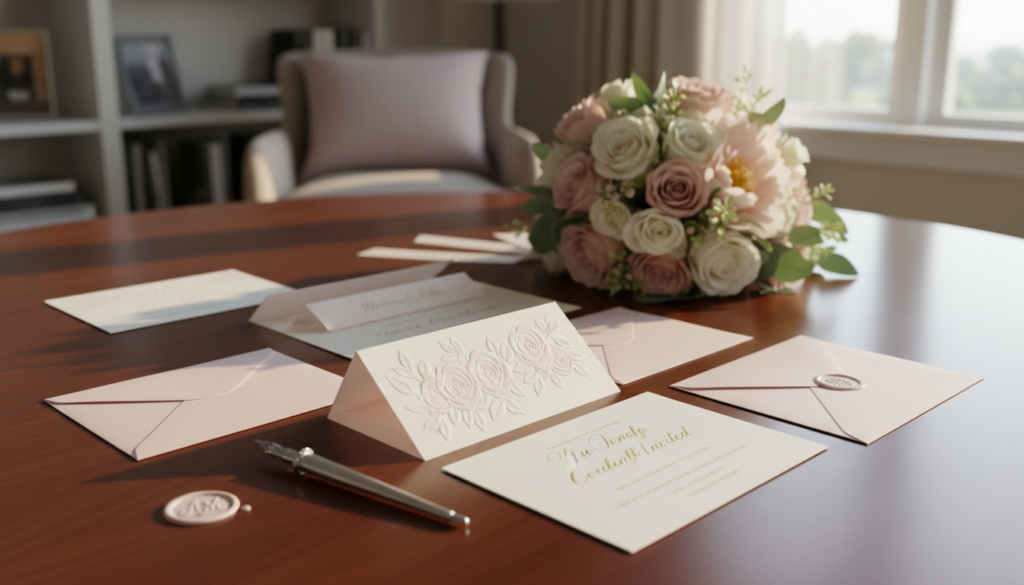
Assembling Your Invitation Suites
Putting together your stationery needs patience and a clean space. Arrange all parts, like the invitation and RSVP envelope, in order. This organized approach helps avoid missing important details.
Make sure envelopes are sealed well and inserts are facing the right way. Checking each suite before mailing gives you peace of mind. Attention to detail shows the care you’ve put into your event.
Double-Checking Postage Requirements
Postage is often overlooked but is key to your wedding invitation schedule. The size and weight of your paper affect the cost. Always have a sample weighed at the post office before buying stamps.
Understanding Weight and Shape Restrictions
Special envelopes or wax seals might need extra postage. They can’t be sorted by machines. Bulky or rigid items may cost more to mail.
Choosing the Right Stamps for Your Envelopes
Once you know the weight, pick stamps that fit your wedding theme. You can find beautiful stamps that match your colors. Choosing the right stamps ensures safe delivery and adds elegance.
Managing Your RSVP Deadline Effectively
Keeping track of your wedding invitation rsvp deadline is key to a stress-free planning process. After confirming your invitation delivery date, focus on the final headcount for your venue and caterer. Staying organized helps avoid last-minute stress and ensures your seating chart is ready on time.
Setting a Reasonable Response Date
Set your response deadline about three to four weeks before the wedding. This gives you time to reach out to guests who haven’t replied and share the final numbers with vendors.
Don’t set the deadline too close to the wedding. Clear communication is vital. Make sure the date is clear on your response cards or digital page.
How to Follow Up with Non-Responders
It’s normal for some guests to miss the deadline. When you follow up, be warm and understanding, not accusatory.
- Send a friendly text or email a few days after the deadline.
- Let them know you’re finalizing numbers for the caterer and need their confirmation.
- Set a specific “reply by” date for the follow-up to keep things moving.
Digital Versus Traditional RSVP Methods
Choosing between paper and digital responses depends on your wedding style and budget. Paper offers a formal touch, while digital is quick and convenient.
Think about these points when deciding:
| Method | Pros | Cons |
|---|---|---|
| Traditional | Formal and keepsakes | Higher cost and slower |
| Digital | Instant and eco-friendly | Less formal feel |
| Hybrid | Flexible for all guests | Requires dual tracking |
The best method is the one that simplifies your life. Digital tracking can save time, but traditional cards are timeless for formal events.
Handling Destination Wedding Invitations
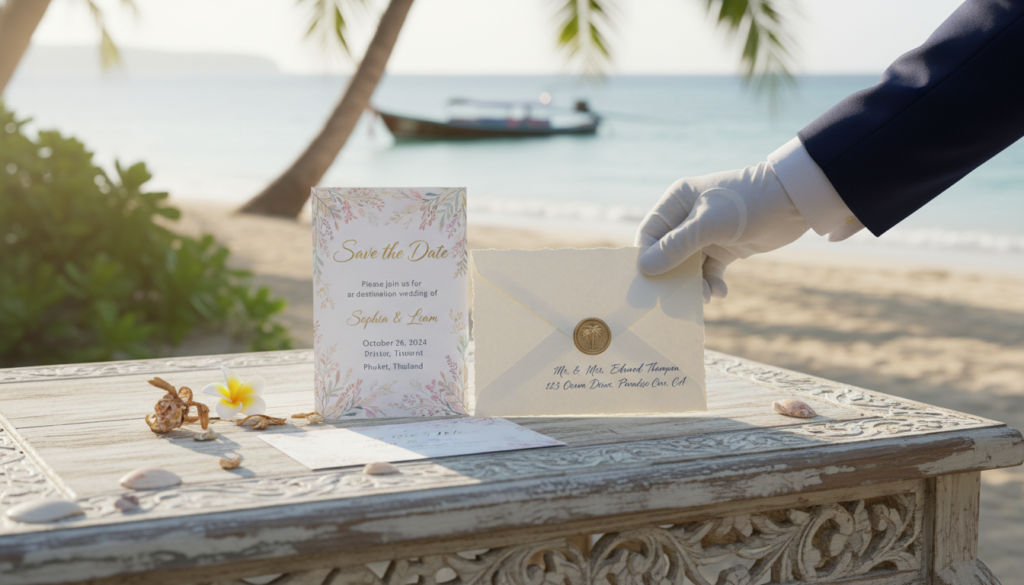
Destination weddings are magical, but they need a special plan for invitations. Guests must book flights and hotels, so you can’t stick to local timelines. Changing your wedding invitation delivery date helps get more people to your wedding.
Extending the Timeline for International Travel
Hosting a wedding abroad means guests face big challenges. They need time to take vacation, save money, and get passports. Sending invitations early shows respect for their efforts and budget.
Send your invitations three to four months before the wedding. This gives guests time to find cheap flights and book hotels. An early wedding invitation delivery date makes planning easier for everyone.
“The success of a destination wedding lies in the clarity of communication provided to guests well in advance of the big day.”
Providing Essential Travel and Accommodation Details
Your invitation should be a detailed guide for guests. They’re going to a new place, so clear info is essential. Include a special insert or a link to a wedding website with important details.
| Category | Key Information | Why It Matters |
|---|---|---|
| Travel | Recommended Airports | Simplifies arrival logistics |
| Lodging | Room Block Codes | Ensures discounted rates |
| Transport | Shuttle Schedules | Prevents guest confusion |
Keep your online resources up to date as plans change. When you share these details with your wedding invitation delivery date, guests can plan with confidence. This way, everyone can enjoy celebrating your love without worrying about travel.
Dealing with Last-Minute Changes and Delays
Even the most well-planned wedding invitation mailing timeline can hit unexpected bumps. Whether it’s a sudden venue closure or a last-minute date change, staying calm and professional is key. Your guests will thank you for being open and honest during these stressful times.
Communicating Venue or Date Shifts
When big changes happen, acting fast is essential. Let your guests know as soon as the new details are set. A clear email or a dedicated update page on your wedding website is perfect for keeping everyone informed.
If you’ve already sent out your formal invites, consider sending a follow-up card or a digital update. This way, you respect your original wedding invitation mailing timeline while making the necessary corrections. Always keep the tone warm and inviting to reassure your loved ones that the celebration is moving forward.
Managing Unexpected Guest List Adjustments
Sometimes, your guest list needs to change after you’ve mailed your invitations. If you need to add or remove guests, talk to them with sincere empathy. It’s always better to communicate directly than to stay silent in these sensitive situations.
For new additions, give them all the details you provided in the original invites. If you have to cut your list, be honest and apologize for the change. By staying organized and flexible with your wedding invitation mailing timeline, you can handle these changes while focusing on the joy of your wedding.
Wedding Invitation Etiquette for Modern Couples
Your wedding invitations are the first glimpse into your big day. So, it’s vital to follow wedding invitation etiquette properly. This ensures every guest feels respected and knows what to expect. Getting these details right makes your invitation look polished and thoughtful.
Addressing Envelopes Correctly
The way you address your envelopes shows the wedding’s formality. For a traditional wedding, use full names and titles like “Mr.” and “Mrs.” on the outer envelope. Consistency is key when you have a big guest list.
For a casual wedding, you might use first names or a relaxed format. Always check the spelling of names and addresses to show you value your guests’ presence.
Including Plus-Ones and Children
Being clear about your guest list avoids awkward moments. If you invite a guest with a partner, include their name on the envelope or inner card. Being specific helps avoid confusion about plus-ones.
Deciding on an adults-only wedding? Here’s how to handle it:
- Address the invitation only to the adults invited.
- Mention “adults-only reception” on your wedding website.
- Be ready to explain your choice kindly if asked.
Navigating Registry Information
Modern wedding invitation etiquette advises against including registry details on the formal invitation. This can make the invitation feel too focused on gifts.
Instead, put your registry link on your wedding website or a small card. This keeps your invitation elegant while giving guests the info they need to support you.
Common Mistakes to Avoid When Mailing Invites
Even the most organized couples can face unexpected challenges when sending out wedding invitations. The details of your stationery can overwhelm you if you’re not careful. By avoiding these common mistakes, you can keep your planning smooth and stress-free.
Forgetting to Include Return Addresses
One big mistake is forgetting to add a return address to your envelopes. If an invitation can’t be delivered, the postal service needs a way to send it back. Without a return address, your invitations might be lost forever. Always remember to include a clear return address on every envelope.
Underestimating the Time for Calligraphy or Printing
Many couples think printing or calligraphy will be quick. But, these services often take longer, even more so during busy wedding seasons. Waiting until the last minute can lead to rushed work and poor quality invitations. Plan ahead to avoid last-minute stress.
Sending Invitations Without Proper Tracking
When you’re sending out wedding invitations, you might worry if they arrive. Sending them without tracking can cause a lot of uncertainty. If you’re concerned about delays, use a service that confirms delivery. This way, you can follow up with guests who might have missed their invitations.
Wedding Invitation Wording Tips to Make Your Invite Stand Out
Your wedding invitation is the first thing guests see. It shows off the style and personality of your big day. By picking the right words, you can get everyone excited and make them feel welcome.
Setting the Tone with Your Opening Lines
The first lines of your invitation set the event’s mood. You can go traditional or modern. Choosing the right tone tells guests what to expect.
Clearly Stating the Who, What, When, and Where
It’s important to share the main details clearly. Make sure the couple’s names, date, time, and place are easy to see. This avoids confusion and helps guests plan.
Adding Personal Touches to Your Formal Text
Even with formal language, you can add personal touches. Think about adding a meaningful quote or something that shows your journey together. These touches make your invitation authentic and heartfelt.
Ensuring Clarity for Dress Code and Logistics
Guests will thank you for clear dress code and logistics info. This makes them feel ready and comfortable. Don’t forget to highlight your wedding invitation rsvp deadline so guests know when to RSVP.
Here are some tips to keep your invitation organized:
- Use clear, easy-to-read fonts for dates and times.
- Include a map or link to your wedding website for directions.
- Be clear about the dress code, like “Black Tie” or “Garden Party Casual.”
- Make sure the wedding invitation rsvp deadline is easy to find.
- Double-check names and addresses for a professional look.
Conclusion
Your wedding day is a beautiful milestone. Managing your guest list ensures your loved ones can celebrate with you. This helps avoid unnecessary stress.
Having a clear schedule brings peace of mind. It helps you manage the busy months before your wedding. By staying organized and communicating well, you’re in control.
Brands like Minted or Zola offer tools to make planning easier. These resources help you keep your planning professional while showing your personal style.
Focus on the excitement of your wedding, not the paperwork. You deserve to enjoy every moment leading up to your big day. Your guests will thank you for making their experience smooth and memorable.
Share your thoughts on planning in the space below. Tell us what part of the invitation process you enjoyed most as you prepare for your wedding.