
Did you know nearly 90% of couples include classic language in their ceremonies? Even today, these time-honored promises are at the heart of wedding celebrations.
Choosing traditional wedding vows connects you with countless couples who’ve stood where you are. These words carry deep emotional weight, making your commitment feel rooted in history.
This guide will help you express your devotion clearly. You can honor tradition while making your day deeply authentic. Embracing these vows makes your ceremony both timeless and personal.
Key Takeaways
- Understand the historical significance behind classic ceremony language.
- Learn how to balance heritage with your own personal style.
- Discover why these promises remain popular for modern couples.
- Gain confidence in speaking your commitment before guests.
- Explore ways to make your ceremony feel authentic and respectful.
Understanding the Significance of Traditional Wedding Vows
Traditional wedding vows connect your future to the past. They tie your ceremony to a long history of values and commitment. Many couples find traditional wedding vows bring stability as they start their new life together.
These vows offer a sense of continuity that modern words can’t match. By saying these words, you join a line of partners who have made the same promise. It’s a foundational promise honored by many couples through history.
“Tradition is not the worship of ashes, but the preservation of fire.”
Choosing traditional wedding vows lets you focus on your commitment. These words have proven their worth over time, capturing love and loyalty perfectly. They are a steady anchor for your relationship as you start your new life.
Using traditional wedding vows in your ceremony connects you to the past. You’re not just making a promise; you’re part of a universal human experience. This adds depth and gravity to your day, lasting for years.
Exploring Classic Wedding Vows Across Different Cultures
Looking into the history of marriage promises reveals a rich mix of global traditions. These classic wedding vows connect your future to the past. They add depth to your ceremony by drawing from history.
Religious Wedding Vows and Their Historical Roots
Many couples find solace in religious wedding vows that have been around for ages. These vows are filled with wisdom from centuries past. They highlight the importance of devotion, faith, and support in a spiritual setting.
“Love is patient, love is kind. It does not envy, it does not boast, it is not proud.”
These vows offer a sense of stability that many seek today. They can be meaningful whether you follow a certain faith or just appreciate their timeless nature. They show that your commitment is part of a long story of love and partnership.
Cultural Wedding Vows and Unique Traditions
Cultural wedding vows bring in special traditions that reflect the couple’s heritage. These vows often celebrate family, community, and ancestral pride. They make your ceremony feel truly yours and deeply connected to your roots.
The table below shows how different traditions view commitment:
| Tradition Type | Primary Focus | Key Element |
|---|---|---|
| Western Classic | Individual Promise | Lifelong Fidelity |
| Eastern Traditional | Family Unity | Ancestral Honor |
| Modern Secular | Personal Growth | Shared Partnership |
By incorporating these varied elements, you can create a ceremony that’s uniquely yours. Whether you prefer classic wedding vows or cultural wedding vows, the aim is the same. You’re making a public declaration of love that respects your heritage and future together.
The Appeal of Timeless Wedding Vows in Modern Ceremonies
Using timeless wedding vows adds a special touch to your modern wedding. Even with more personal and casual weddings, these vows bring a sense of stability. They offer a solid base when life seems to rush by.
Choosing classic wedding vows connects you with couples from the past. These vows add depth and importance to your ceremony. They contrast today’s trends with the lasting nature of your promise.
Modern weddings often mix new styles with old vows. This blend makes your vows feel true to your relationship while respecting tradition. Classic wedding vows can be the perfect frame for your personal words.
By picking timeless wedding vows, you choose words that have proven their worth. They link your past and future together. Here’s why these traditional elements are so powerful in today’s weddings.
| Feature | Modern Vows | Traditional Vows |
|---|---|---|
| Emotional Tone | Casual and spontaneous | Solemn and profound |
| Structure | Free-form storytelling | Established, rhythmic phrasing |
| Longevity | Reflects current trends | Timeless and universal |
| Primary Goal | Personal expression | Binding commitment |
How to Write Wedding Vows in 7 Easy Steps
Your wedding ceremony vows are the heart of your big day. Writing them is simpler than you think. Break it down into steps, and you’ll turn your feelings into a beautiful gift for your partner.
Step One: Reflect on Your Relationship Journey
Begin by reflecting on your time together. Think about the defining moments that led you here. From your first date to the challenges you’ve faced together.
Step Two: Establish the Tone for Your Promises
Choose the tone for your wedding ceremony vows. Do you want them to be funny, romantic, or serious? Keeping the tone consistent makes your vows feel true to your relationship.
Step Three: Draft Your Initial Thoughts and Memories
Don’t worry about making it perfect yet. Just write down your favorite memories and the things you love about your partner. Also, think about the promises you want to make for your future together.
Step Four: Incorporate Traditional Elements or Quotes
If you’re stuck, add a classic poem or a timeless quote. These elements can connect your personal stories to universal themes of love, making your vows even more special.
Step Five: Edit for Clarity and Emotional Impact
Read your draft out loud. This helps you see if it feels right. Remove any extra words to make your message clear, simple, and powerful.
Step Six: Practice Your Delivery Out Loud
Practice makes perfect. Stand in front of a mirror or read to a friend. This will help you get used to the way your words sound and feel.
Step Seven: Finalize Your Vows for the Ceremony
When you’re happy with your vows, write them down on a card or in a special book. Having your wedding ceremony vows in writing will help you stay calm and focused on your big day.
Examples of Traditional Marriage Vows for Your Ceremony
Looking for the perfect way to express your love? These traditional marriage vows are a great starting point. Finding the right mix of tradition and your own voice is a special part of your wedding journey. Whether you like a formal tone or something modern, these examples will help you make a meaningful promise.
Standard Religious Vow Examples
Many couples choose religious wedding vows for their timeless commitment and spiritual depth. These vows have been spoken for generations, linking you to a long history of devotion. A common example often used in many Christian ceremonies includes the following:
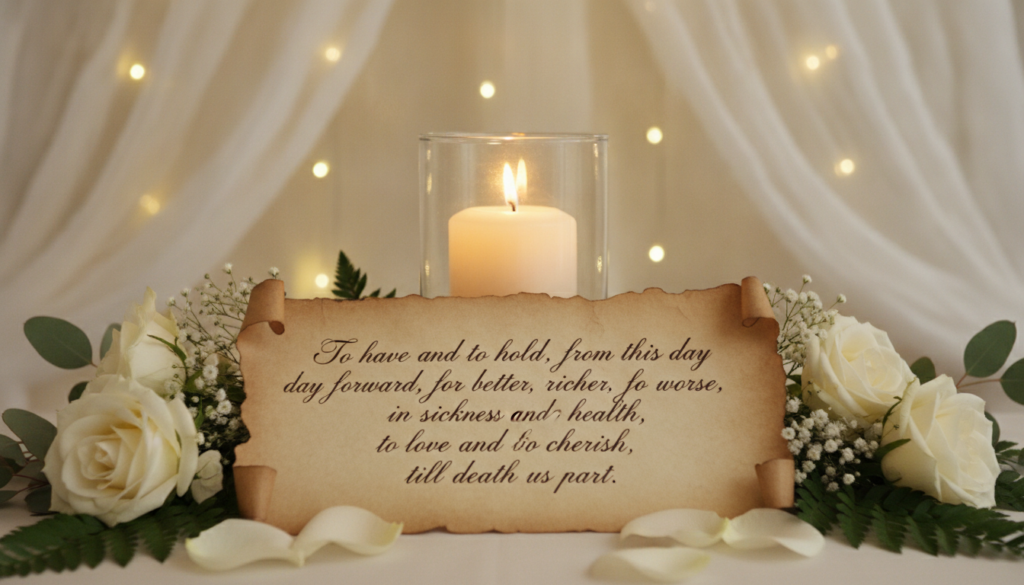
“I, [Name], take you, [Name], to be my wedded spouse, to have and to hold from this day forward, for better or for worse, for richer or for poorer, in sickness and in health, to love and to cherish, till death do us part.”
This structure provides a strong foundation for your ceremony. You can keep these words exactly as they are or add a personal sentence at the end to reflect your unique bond.
Non-Denominational Classic Vow Examples
If you prefer a secular approach, classic wedding vows offer elegance without specific religious references. These traditional wedding vows focus on the partnership and the journey you are starting together. They are perfect for couples who want a ceremony that feels both timeless and personal.
Consider this example for your own celebration:
“I, [Name], take you, [Name], to be my partner in life. I promise to stand by your side through all of life’s changes. I will listen to you with compassion, support your dreams, and love you unconditionally from this day forward.”
Using these classic wedding vows allows you to maintain a formal tone while keeping the focus on your relationship. Feel free to adjust the wording to ensure it feels authentic to your personality and your shared future.
Blending Old Fashioned Wedding Vows with Personal Touches
Your wedding vows should be a mix of old and new. Many couples fear that adding personal stories will lessen the impact of timeless wedding vows. But, using classic vows as a base lets you share your own story.
Choosing old fashioned wedding vows connects you to a long history of commitment. These words carry a deep meaning that touches everyone. Adding your own memories or jokes makes these vows truly yours.
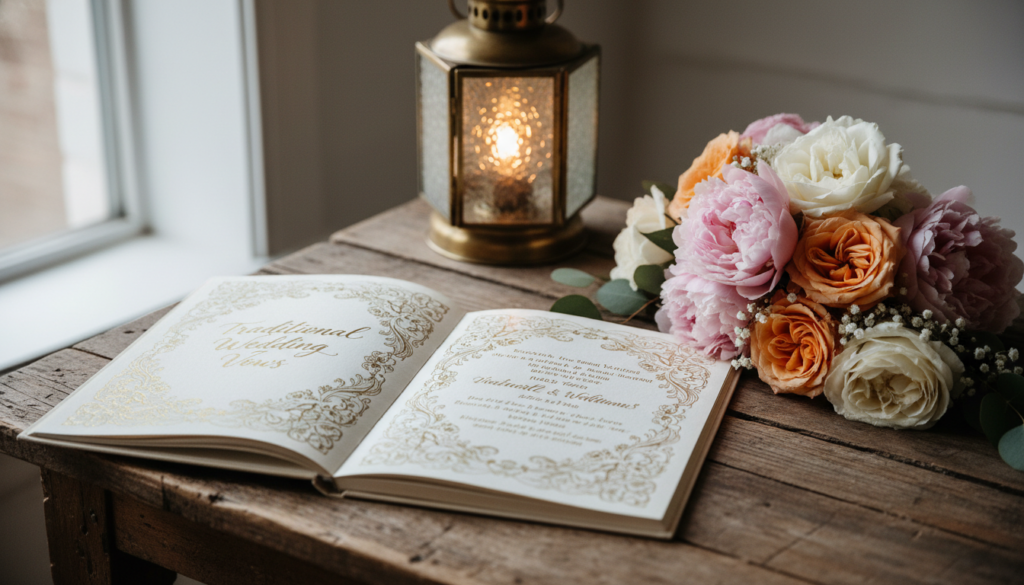
Imagine your vows as a sandwich. Start with a formal opening to set the mood. Then, add your personal stories or promises that show your unique connection. End with a traditional vow to keep the ceremony’s solemn roots.
“The best vows are those that speak to the past, honor the present, and promise a future built on the foundation of shared truth.”
Not sure how to mix these parts? Here’s a simple guide to help you:
| Vow Component | Traditional Approach | Blended Approach |
|---|---|---|
| Opening | Formal declaration | Classic greeting with a personal touch |
| The Promise | Standard “I do” | Classic promise followed by a specific goal |
| The Closing | Religious or legal phrasing | Traditional closing with a heartfelt nickname |
Your aim is to make your personal touches enhance the timeless wedding vows, not overshadow them. Keep your stories short and focused on your shared values. When done right, your vows will feel both grand and intimate.
Navigating Traditional Vow Renewal Ceremonies
Planning a traditional vow renewal is a way to celebrate your journey together. It marks a beautiful milestone in your growth as a couple. You get to reflect on your original promises and look forward to your future together.
Preparing for this ceremony can be both nostalgic and exciting. It’s not just about repeating vows; it’s about validating the resilience of your partnership. Many couples add elements from their original wedding to connect with their shared history.
Choosing the right words is key for a meaningful traditional vow renewal. You should mix the classic structure of your first vows with the wisdom you’ve gained. This blend tells a powerful story of your current reality and your hopes for the future.
| Feature | Original Wedding Vows | Renewal Vows |
|---|---|---|
| Primary Focus | Future promises and hopes | Shared history and growth |
| Emotional Tone | Anticipation and excitement | Gratitude and deep reflection |
| Commitment Style | Formal and traditional | Personalized and seasoned |
| Ceremony Goal | Starting a new life | Celebrating a lasting bond |
Your ceremony should truly reflect who you are today. Whether you write new vows or reaffirm old ones, sincerity is key. By celebrating the strength of your bond, your traditional vow renewal will be a treasured memory for years.
Tips for Delivering Your Wedding Ceremony Vows with Confidence
Speaking your wedding ceremony vows is a special moment. It’s a chance to connect deeply with your partner. Even if you’re nervous, you can turn that into a meaningful experience.
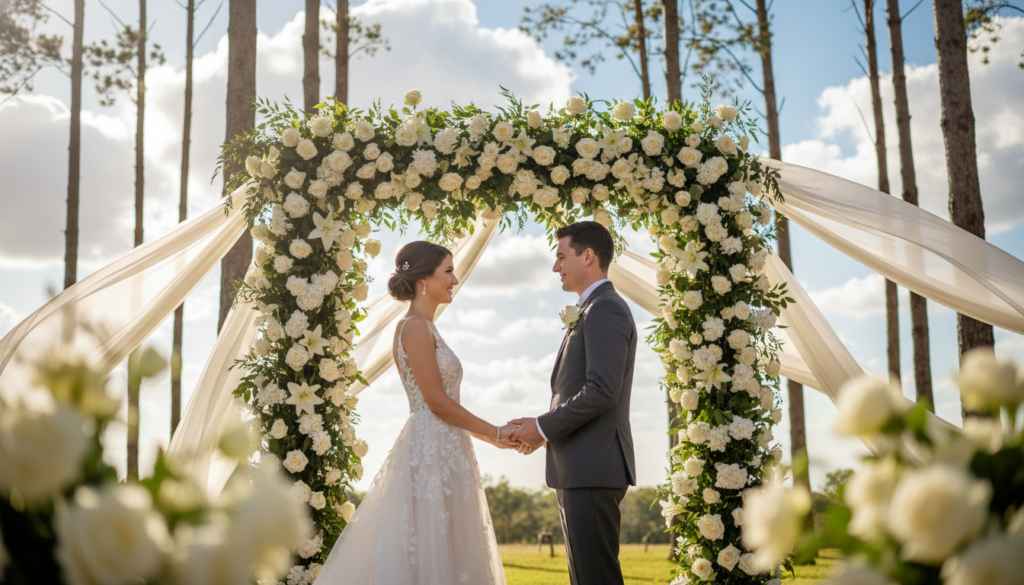
Start by focusing on your breathing. A few slow, deep breaths can calm you down. When you speak, keep eye contact with your partner. This makes your words feel more personal, even with everyone watching.
If your voice shakes, remember your guests are there to support you. It’s okay to pause and gather your thoughts. Embrace the silence; it can make your words even more sincere.
Working with Your Officiant on Vow Structure
Your officiant is a big help in making the ceremony run smoothly. Plan a time to go over the order of events. This way, you know exactly when it’s your turn to speak.
Talk to your officiant about the pace of your wedding ceremony vows. Make sure they fit well with the rest of the ceremony. A well-planned ceremony helps you speak clearly and from the heart. By planning ahead, your special moment will be seamless and stress-free.
Common Mistakes to Avoid When Writing Your Vows
Writing the perfect promise is more than just love. It needs careful planning to avoid common mistakes. Many couples try to include every detail of their relationship. But this often makes vows too long.
When vows are too long, guests may find it hard to follow the emotional core of your message.
One big mistake is being too long-winded. You want to show your devotion, but keep it short. Aim for a length that lets you speak clearly and slowly.
Another trap is losing focus on the core promises. It’s easy to get caught up in inside jokes or long stories. But your vows should mainly talk about your future together.
Even with old fashioned wedding vows, make sure they feel true to your relationship.
Don’t rely too much on generic templates online. They can be a starting point, but your vows should reflect your unique journey. Mix traditional phrasing with personal thoughts to keep it real.
Lastly, practice is key to avoiding mistakes during delivery. Reading your draft out loud helps spot awkward parts. By refining your vows, you can honor the beauty of old fashioned wedding vows and create a memorable moment for everyone.
Resources for Finding Inspiration for Your Vows
Struggling to find the right words? Many timeless resources can help. You don’t have to start from scratch with your traditional marriage vows. Often, the most moving promises come from the wisdom of the past.
Look into classic literature and poetry for inspiration. Many authors have captured the essence of commitment in their works. Reading these works can help you find the values you want to highlight in your vows.
Historical archives are also a great source of inspiration. By looking at how couples expressed their love in the past, you can find unique phrases for your traditional marriage vows. These archives often include letters and journals that show the lasting power of love.
Start a personal library of ideas to stay organized. Save quotes, verses, or short phrases that speak to your relationship goals. Having this collection will make crafting traditional marriage vows easier and more personal.
The goal is to find words that reflect your unique bond. Use these diverse resources to build vows that you’ll cherish for a lifetime. Take your time to explore and let your inspiration grow naturally.
Conclusion
Your wedding day is the start of a beautiful chapter in your life. Writing your vows is a personal journey. It honors the history of marriage and celebrates your unique bond.
Our guide on How to Write Wedding Vows in 7 Easy Steps (+ Examples) helps you create heartfelt vows. These vows will be cherished for years to come. They lay the foundation for your future together.
The sincerity and love you bring to your vows are key. Whether you use classic phrases or modern reflections, your partner will appreciate your effort. Your vows are a special message to them.
Take a moment to focus on the person standing before you. Your vows show the strength of your partnership and the joy you share. Trust in your voice as you speak these promises aloud.
We encourage you to share your vow-writing experiences or ask questions about personalizing your ceremony. Your story inspires others who are preparing for their own special day. Start drafting your promises today and celebrate the beauty of your upcoming celebration.